 07971549540

 Send Inquiry


 Send Inquiry
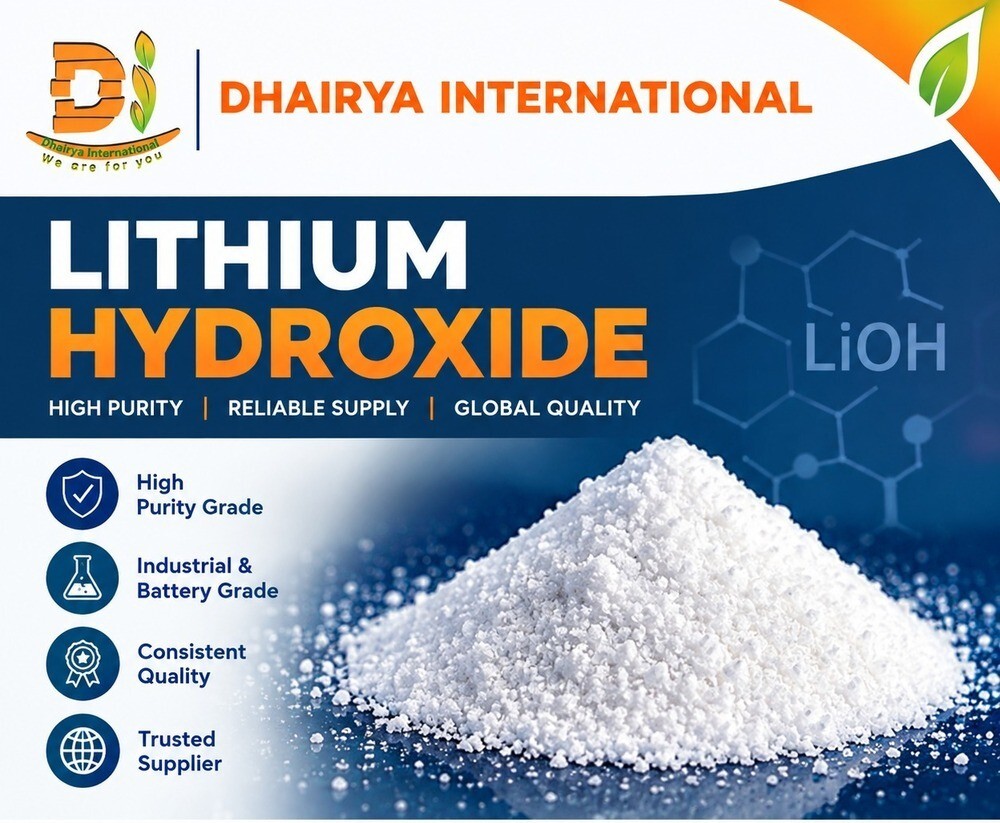
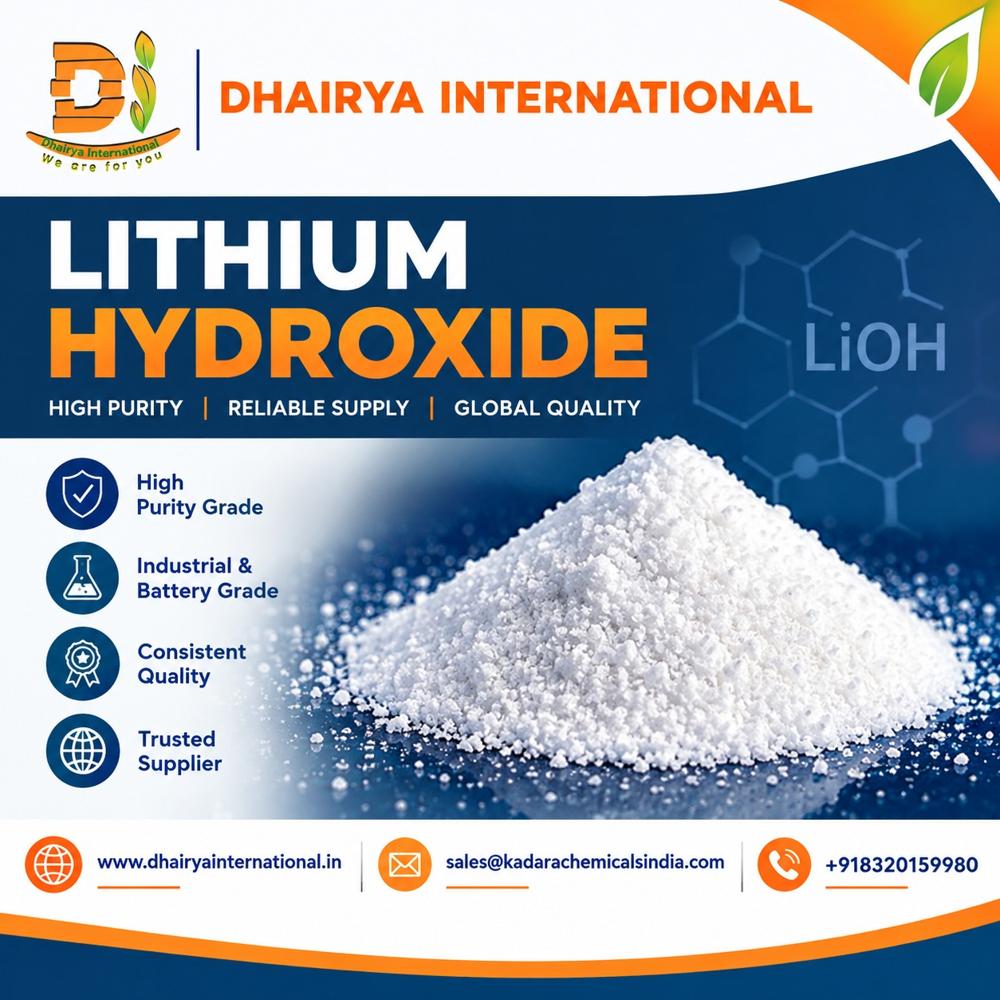
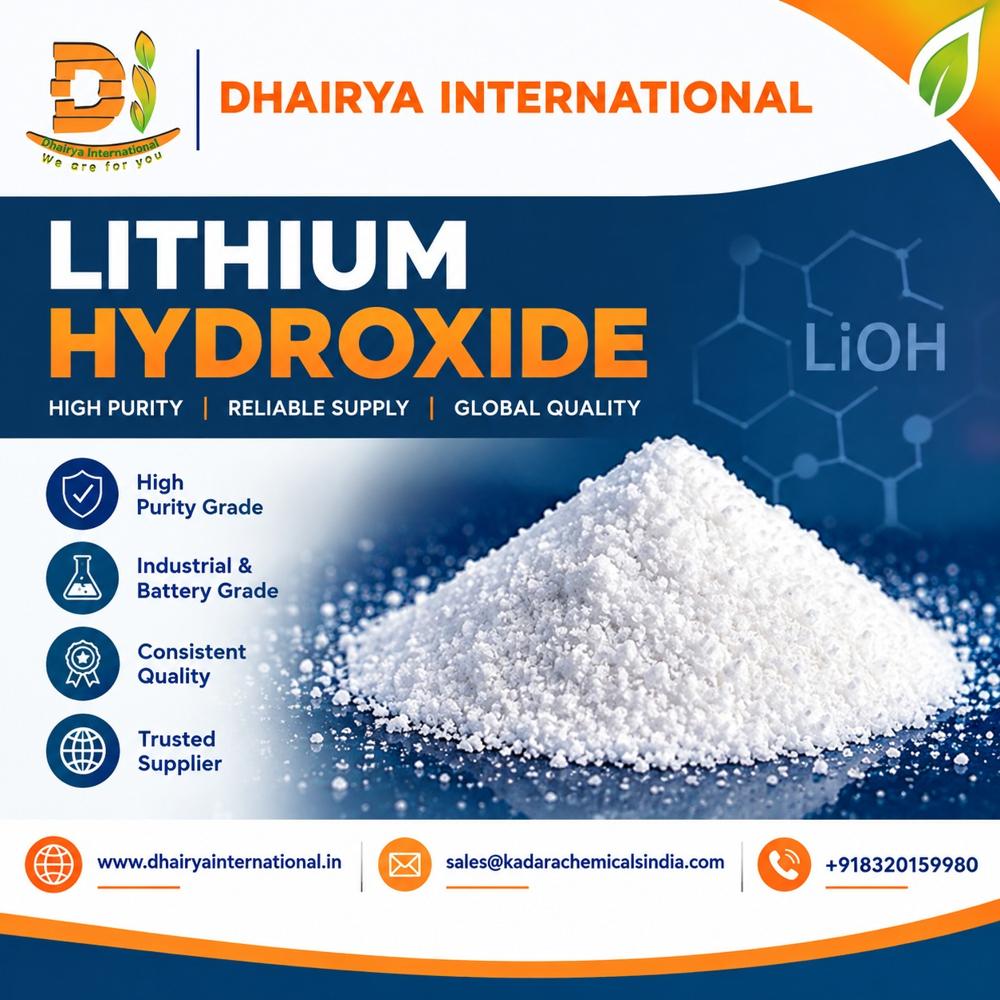
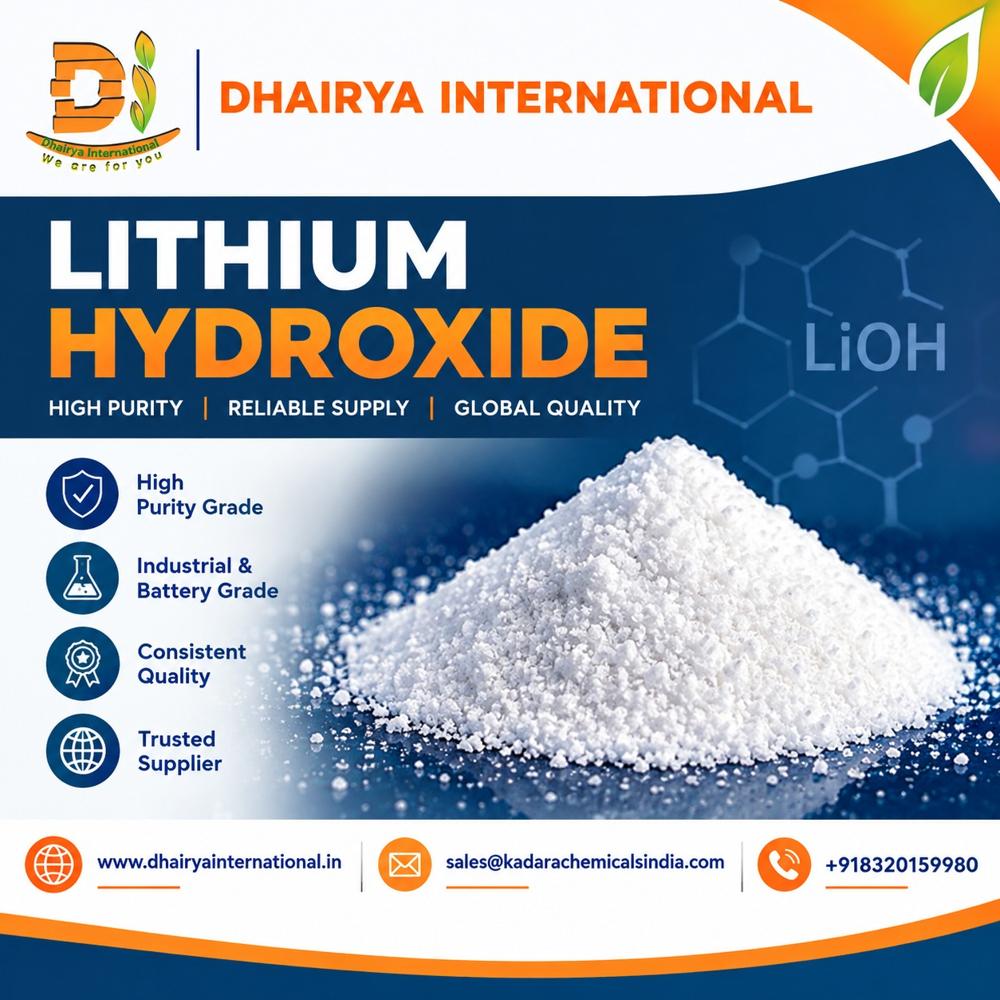
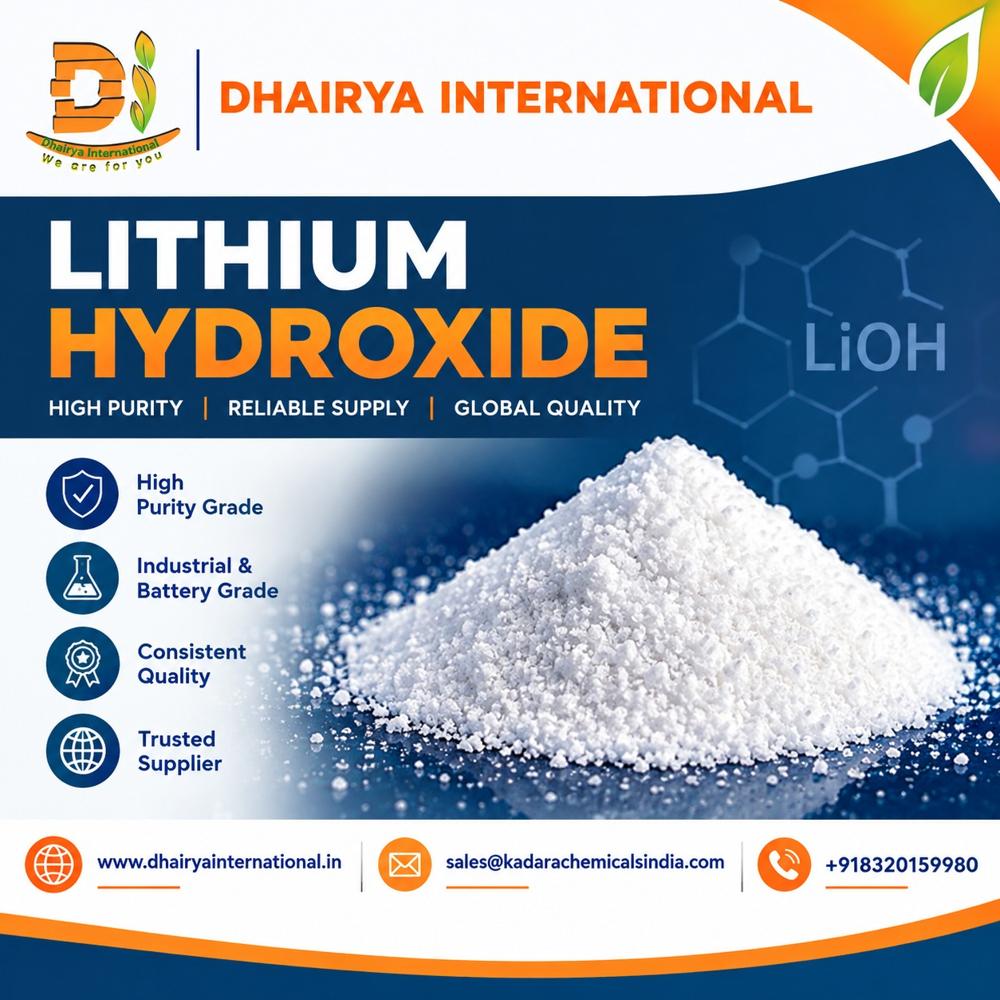
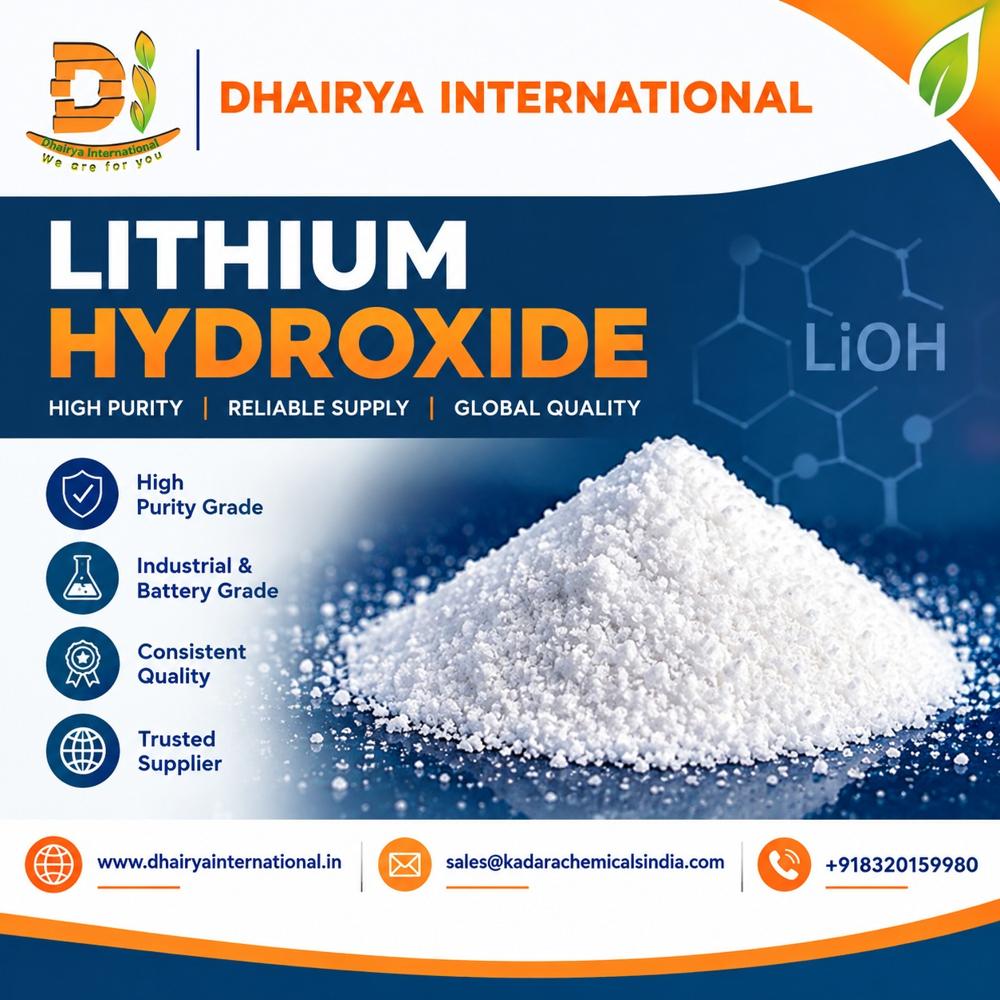
Lithium Hydroxide
Price 2300.0 INR/ Kilograms
MOQ : 50 Kilograms
Lithium Hydroxide Specification
- Ph Level
- approximately pH 14 or higher
- Molecular Formula
- 41.96 g/mol
- Structural Formula
- LiOH
- Melting Point
- The melting point of Lithium Hydroxide (LiOH) is approximately 462 C. For Lithium Hydroxide Monohydrate (LiOH H O), it does not have a simple melting point because it loses its water of crystallization upon heating, typically around 100 140 C, before forming anhydrous LiOH.
- CAS No
- 1310-65-2
Lithium Hydroxide Trade Information
- Minimum Order Quantity
- 50 Kilograms
- FOB Port
- Vadodara
- Payment Terms
- Cash in Advance (CID), Cheque
- Supply Ability
- 10000 Kilograms Per Day
- Delivery Time
- 3 Days
- Packaging Details
- Bag Packing
- Main Domestic Market
- All India
About Lithium Hydroxide
Lithium Hydroxide Technical & Application Summary
Chemical Name: Lithium Hydroxide
Formula: LiOH
CAS No.: 1310-65-2
Molecular Weight: 23.95 g/mol
Appearance: White crystalline solid / powder
Nature: Strong inorganic alkali; hygroscopic and corrosive
Lithium Hydroxide Monohydrate
Formula: LiOHHO
CAS No.: 1310-66-3
Molecular Weight: 41.96 g/mol
LiOH Equivalent: Approximately 57.1%
Key Chemical Properties
Lithium hydroxide is a strong alkaline, water-soluble lithium compound. It readily reacts with acids to form lithium salts and water and absorbs carbon dioxide from air to form lithium carbonate:
2LiOH + CO LiCO + HO
It is hygroscopic and should be protected from moisture and atmospheric CO. It is non-combustible but is strongly corrosive and can cause severe burns to skin and eyes. Contact with certain metals, such as aluminium and zinc, can generate hydrogen.
Major Industrial Applications
-
Lithium-ion batteries: Important lithium source for manufacturing cathode materials such as NMC, NCA and high-nickel cathodes.
-
Lubricating greases: Used to manufacture lithium soaps, including lithium 12-hydroxystearate, for high-performance lubricating greases.
-
CO absorption: Used in closed-air systems, spacecraft, submarines and specialized gas-purification applications.
-
Ceramics & glass: Used in selected lithium-containing ceramic and glass formulations to modify thermal and processing properties.
-
Chemical manufacturing: Raw material/intermediate for producing various lithium salts and specialty lithium chemicals.
-
Other applications: Specialty chemical synthesis, polymerization/catalyst systems and selected industrial processing applications.
Commercial Grades
Technical Grade: Used mainly for grease, chemical manufacturing, CO absorption and selected industrial applications.
Battery Grade: High-purity LiOHHO with tightly controlled impurities such as LiCO, Na, K, Ca, Mg, Fe, Ni, Cu, SO, Cl and moisture, depending on the battery/cathode manufacturer's specification.
Storage & Handling
Store in tightly sealed, moisture-resistant packaging in a cool, dry and well-ventilated area. Avoid contact with acids, moisture, CO and incompatible metals. Handle with appropriate chemical-resistant gloves, protective clothing and eye/face protection.
Transportation: Anhydrous lithium hydroxide is generally classified as UN 2680, Class 8 (Corrosive), Packing Group II; always verify the current product SDS and applicable transport regulations.
Key commercial distinction: Always specify whether the product is anhydrous LiOH or LiOHHO (monohydrate) and whether it is technical grade or battery grade when requesting quotations or preparing specifications.
Tell us about your requirement

Price:
Quantity
Select Unit
- 50
- 100
- 200
- 250
- 500
- 1000+
Additional detail
Mobile number
Email

More Products in Industrial Chemical Supplies Category

Plastic Pyrolysis Catalyst
Price 80 INR / Kilograms
Minimum Order Quantity : 100 Kilograms
Purity : >99%
Form : Powder
Density : 0.70 Gram per cubic centimeter(g/cm3)
Usage : Chemical industry

Sodium Nitrite
Price 40.5 INR / Kilograms
Minimum Order Quantity : 100 Kilograms
Purity : 99%
Form : Solid
Density : 2.17 Gram per cubic centimeter(g/cm3)
Usage : Preservative Anticorrosion Agent Dyes Pharmaceuticals

Sodium Acetate Trihydrate
Price 12 INR / Kilograms
Minimum Order Quantity : 100 Kilograms
Purity : 99%
Form : Powder
Density : 1.52 Kilogram per cubic meter (kg/m3)
Usage : Sodium acetate trihydrate is a hydrate. It contains a sodium acetate. The trihydrate sodium salt of acetic acid, which is used as a source of sodium ions in solutions for dialysis and as a systemic and urinary alkalizer, diuretic, and expectorant.

Chromium Oxide Green
Price 425.0 INR / Ton
Minimum Order Quantity : 5 Tons
Purity : 99%
Density : 5.22 g/cm Gram per cubic centimeter(g/cm3)

Contact Us

- Ground Floor, Block No. 351, P2, Tundev, Namisara Road, Savli,Vadodara - 390019, Gujarat, India
- Phone : 07971549540
DHAIRYA INTERNATIONAL
GST : 24AVTPR8967R1ZZ
GST : 24AVTPR8967R1ZZ

- Mr Dhairya Kumar (MD)
- Mobile :07971549540
- Ms. Khushi (Production Manager)
- Mobile :07971549540
- sales@kadarachemicalsindia.com
- Mobile :+918320159980, +918035063440

|


DHAIRYA INTERNATIONAL
All Rights Reserved.(Terms of Use)
Developed and Managed by Infocom Network Private Limited.
Developed and Managed by Infocom Network Private Limited.

